Trading, A Beginner's Roadmap to Day Trading From Scratch
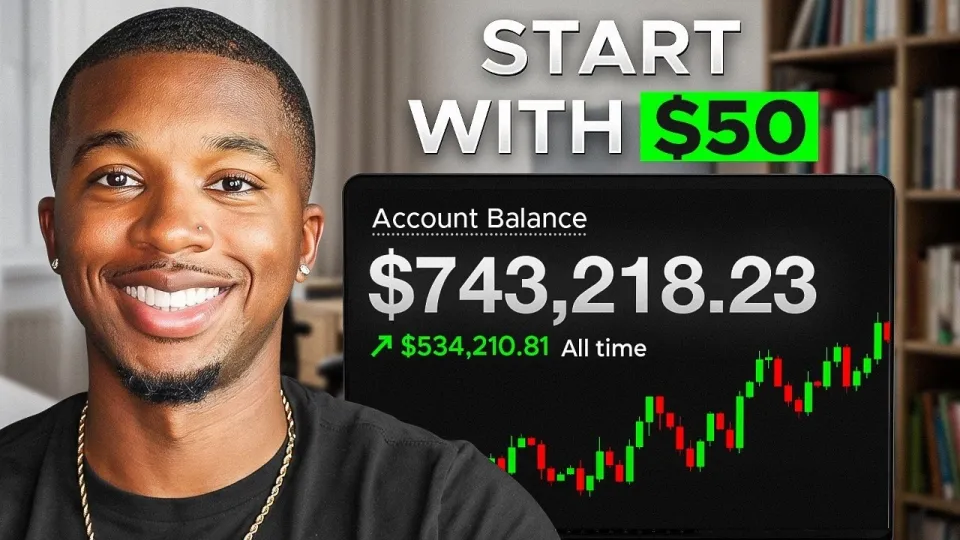
Video: Easiest Way To Start Day Trading From Scratch (Exactly What I Did)
Want articles like this for your own video to promote it on YouTube and Google? Order them through the Telegram bot @sat_sit_bot. It writes articles around your video, embeds the video and publishes them on popular niche websites (no ads). Try it free: 50 articles on us.
· based on the channel Jooviers Gems
Key takeaways
- Day trading means opening and closing positions within the same session, not holding overnight.
- Start on a demo account and backtest a single setup for at least 30 days before risking real money.
- Prop firms let you trade firm capital after passing an evaluation, but they charge fees and enforce rules.
- Risk no more than 1% of account equity per trade; a 2:1 reward-to-risk ratio keeps a 40% win rate profitable.
- Most beginners lose money in the first months — treat early losses as tuition, not failure.
Trading is the act of buying and selling financial instruments to profit from price changes, and the easiest way to start day trading from scratch is to pick one market, learn one setup on a demo account, and risk a fixed small amount per trade before scaling up. You do not need a large account, a finance degree, or expensive software to begin. What you need is a repeatable process and the patience to follow it. For a structured walkthrough of that process, see the Inner Circle from Jooviers Gems, where the full trade breakdowns are shared.
What day trading actually is and what it is not
Day trading means opening and closing every position within the same trading session, so nothing is held overnight. That single rule separates it from swing trading, where positions last days or weeks, and from investing, where the horizon is years. Because nothing is carried overnight, day traders avoid gap risk — the price jumps that happen between the close and the next open — but they pay for it with constant screen time and higher transaction costs.
The instruments most accessible to beginners are futures (such as the E-mini S&P 500, ticker ES, or the Micro version MES), major forex pairs like EUR/USD, and large-cap stocks. Futures and forex offer high liquidity and long trading hours; micro contracts let you control risk with a small account. Day trading is not a get-rich-quick scheme: it is a skill business where the first goal is survival, not profit.
A step-by-step way to start from zero
Starting from scratch works best as a sequence, not a scramble. Follow these steps in order and do not skip ahead:
- Choose one market. Pick a single instrument — for example, MES futures or EUR/USD — and ignore everything else for the first few months.
- Learn how price moves. Study candlestick charts, support and resistance, and basic market structure (higher highs and higher lows versus lower highs and lower lows).
- Select one setup. A simple example: wait for price to sweep a recent low, then buy when it reclaims that level with a strong candle.
- Backtest it. Go through at least 100 historical examples and record the result of each one in a journal.
- Trade it on a demo account. Spend 30 to 60 days executing the setup in real time without real money.
- Go live small. Start with the smallest position size your broker allows and one trade per day.
Each step builds on the previous one. Skipping backtesting or demo trading is the single most common reason beginners blow up an account within weeks.
Risk management: the part that keeps you in the game
Risk management is what determines whether a beginner survives long enough to become consistent. The widely used guideline is to risk no more than 1% of your account equity on a single trade. On a $5,000 account that is $50 of risk per position, which you control through position size and stop-loss placement — not through hope.
A stop-loss is an order that closes your trade automatically at a predetermined loss. A take-profit does the same at a predetermined gain. With a 2:1 reward-to-risk ratio, you only need a 40% win rate to break even before costs: ten trades risking $50 each, four winners at $100 and six losers at $50, produce $400 in gains against $300 in losses. Two additional habits matter just as much: a daily loss limit (for example, stop trading after losing 3% in one day) and a fixed number of trades per session, which prevents revenge trading after a loss.
How prop firms and funded accounts fit in
Prop firms, also called proprietary trading firms, give traders access to company capital in exchange for a one-time evaluation fee. The model works like this: you pay a fee, trade a simulated or live account under strict rules, and if you hit a profit target without breaching the drawdown limits, you receive a funded account and a share of the profits — often 80% to 90%.
Typical evaluation rules include a profit target of 6% to 10%, a maximum daily loss of 4% to 5%, and an overall drawdown limit of 6% to 12%. These numbers vary by firm, so read the rulebook before paying. Prop trading is not free money: the fee is real, the rules are strict, and most participants fail the evaluation. Its advantage for beginners is that it caps the cost of learning at the price of the challenge rather than the size of a personal account. Brokers and funded-account programs such as those linked from the Jooviers Gems channel serve the same purpose — giving small accounts more buying power — but the strategy still has to work first.
Common beginner questions and mistakes
Most beginner doubts repeat across every trading community, and the answers are usually simpler than the questions. The table below covers the recurring themes.
| Question | Practical answer |
|---|---|
| How much money do I need to start? | You can begin on a demo account with zero. For live trading, $500 to $2,000 is enough with micro contracts; more capital mainly reduces pressure, not the need for skill. |
| How long until I am profitable? | Expect 6 to 12 months of consistent practice. Some traders take longer, and that is normal. |
| Should I buy a course? | A structured course shortens the learning curve, but free content plus disciplined backtesting can work. Judge any course by whether it teaches risk management, not just entries. |
| Why do I keep losing after a few wins? | Usually position size grows after wins, or rules are abandoned. Keep risk per trade constant regardless of the last result. |
The most damaging mistakes are trading without a stop-loss, switching strategies after two or three losses, and comparing personal progress to the highlight reels on social media. A journal — either a spreadsheet or a dedicated app — fixes most of this because it turns vague feelings into data: win rate, average win, average loss, and rule violations per week.
Useful links
- Inner Circle with all trades: https://www.getgemify.com/innercircleo?el=youtube_organic
- Instant funding to trade: https://www.theedgefunder.com/
- The Edge Funder Discord community: https://discord.gg/WpJXHKK7f2
- Instagram: https://www.instagram.com/joovier_
- Recommended forex broker: https://herofx.co/joovier/
The bottom line
Trading rewards process over prediction, and the fastest route from zero to competence is one market, one setup, a demo account, and strict risk limits. The video breakdown by the Jooviers Gems channel is a useful companion because it shows both the wins and the reality behind them, which is exactly what beginners need to see. Start with the smallest possible risk, keep a journal from day one, and measure progress in months rather than days. If you want the full trade-by-trade breakdowns and a community to learn alongside, join the Inner Circle here and treat your first year as an apprenticeship.
Questions & answers
How much money do I need to start day trading?
You can start learning on a demo account with no money at all, which is the recommended first step. For live trading, $500 to $2,000 is enough to trade micro futures or small forex positions with proper risk control. The size of the account matters less than keeping risk per trade at 1% or less.
Is day trading gambling?
Day trading becomes gambling when there is no defined setup, no stop-loss, and no position sizing rule. With a tested strategy, fixed risk per trade, and a daily loss limit, it is a probabilistic business where a 40% win rate can still be profitable at a 2:1 reward-to-risk ratio. The difference is entirely in the process.
Should I use a prop firm instead of my own money?
Prop firms let you trade firm capital after paying an evaluation fee and passing strict rules, typically a 6% to 10% profit target with a 4% to 5% daily loss limit. They are useful for traders who already have a proven strategy but limited capital. Beginners should still validate the strategy on a demo account before paying any fee.
How long does it take to become consistently profitable?
Most traders need 6 to 12 months of daily practice, backtesting, and journaling before results stabilize, and some take longer. Progress is measured in rule adherence and risk control first, and in profit second. Comparing your first month to someone else's highlight reel is the fastest way to quit too early.
Source: Easiest Way To Start Day Trading From Scratch (Exactly What I Did) · Markdown version